
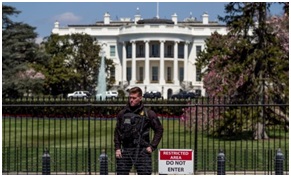
The Department of Homeland Security (DHS) recently unveiled a facial recognition pilot program that uses security cameras to capture images of people outside the White House. The images are then used to match captured faces topeople of interest. According to a document released last week,people of interest currently consist of Secret Service members that volunteered for the pilot program.
The collection of volunteer subject data will assist USSS (Secret Service) in testing the ability of facial recognition technology to identify known individuals and to determine if biometric technology can be incorporated into the continuously evolving security plan at the White House Complex, says the DHS.
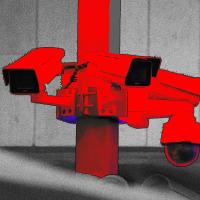
The program will take place in two different areas one that offers a controlled flow of individuals, is well-lit and free of environmental obstructions, and another that is an open setting, where environmental factors such as lighting and obstructions will vary. The Secret Services CCTV surveillance system will provide video streams from the selected cameras to the facial recognition pilot database for identity matching. The facial recognition system will then analyze the video streams to identify facial images.
DHS says,The identified facial images will be queried using facial recognition algorithms against the gallery of photos of USSS volunteers used in the pilot. This will result in a no match or match result. USSS will use this data to test the ability of the FRP (facial recognition pilot) database to confirm the identity of volunteer USSS employees using facial biometric comparison algorithms. Of course, not everyone is as excited as the government about the use of this type of surveillance.
The Secret Service envisions using the technology to provide early warning about subjects of interest who are approaching the White House prior to direct engagement with law enforcement. We dont exactly know how the Secret Service determines if someone is a subject of interest. A?? Then theres the question of where this leads. Exactly how wide a radius does the Secret Service want to monitor? Is there any reason to think it wouldnt want to follow its subjects of interest 24/7 and nationwide if technology makes that easy enough?, says the ACLU in a blog post about the pilot program.
 Twitter