
Interpols deployment of a specialised team to the 30th Southeast Asian Games to support law enforcement authorities in Manila has identified over 120 potential threats and led to the arrest of a number of international fugitives.
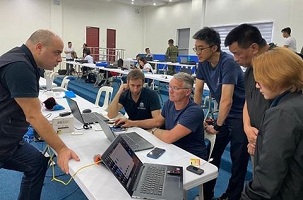
The Interpol Major Events Support Team (IMEST) assisted local authorities as part of the security infrastructure surrounding the event, preparing, coordinating and implementing security arrangements to prevent and address any terrorist threats and serious criminal offences.
The IMEST, located at a Multi Agency Command Center (MACC) and the Manila Ninoy Aquino International Airport, supported the Immigration and Interpol National Central Bureau officers for enhanced passenger screening and travel document examination at airports and border points, using Interpols global policing capabilities.
More than four million searches were conducted against Interpols databases during the deployment of its team, resulting in over 120 potential threats identified following hits against its Stolen and Lost Travel Documents (SLTD) and other databases containing information on internationally wanted criminals. The deployment of the IMEST was supported by Interpols Project Riptide, which aims to tackle foreign terrorist fighter (FTF) movement in Southeast Asia.
Further investigative leads were also generated in a number of cases including on more than 25 internationally wanted persons targeted by Red Notices in connection with charges including murder, fraud, bribery, firearms, drugs and crimes against children. Notably, seven Korean fugitives, wanted under charges ranging from assault to fraud and high tech crimes, were identified as Interpols IMEST team checked arrival and departure data from Manila and Cebu airports. All seven fugitives were detained and successfully extradited to the Republic of Korea where they were arrested.
For police to be effective in securing major events, it is vital that they have all the information they need, at the right time and at the right place, especially at border control points. Through Interpols global network, the authorities in the Philippines were able to extend their national security perimeter far beyond their own border. Initiatives such as Project Riptide are paramount to empowering officials to secure their borders by making full use of Interpols policing capabilities, said Hans Jürgen Pechtl of Interpols Operational Support and Analysis unit.
The IMEST teams work that led to the arrests also demonstrated the effectiveness of INTERPOLs Facial Recognition System, an automated software application that matches photos of suspected criminals with the biometric data in Interpols global databases.
 Twitter